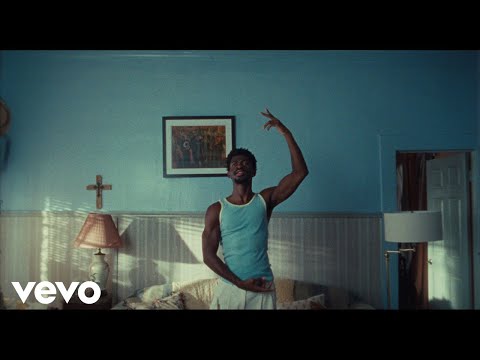
Born and raised in New Jersey, Sheik would split his time there and North Carolina after his parents separated. As a child he learned to play the piano and later the guitar. By the time he was a teen, Sheik would perform with fellow high school students in a cover band. Following his graduation from Brown University in 1992, he moved to Los Angeles to pursue a career in music.
After playing guitar for a few bands and making some connections, Sheik was signed to Atlantic Records and his self-titled debut, which he wrote all of the songs and featured production by Rupert Hine, was released in 1996. The first single, "Barely Breathing" became a big hit, peaking at number sixteen on the Billboard Hot 100 chart (staying on the chart for an impressive fifty-five consecutive weeks) and earned Sheik a Grammy nomination for Best Male Pop Vocal Performance. While this would remain his only significant commercially successful song, Sheik would go on to record nine studio albums throughout his career with his final album was "Claptrap" in 2022.
In 2002, he would begin to expand his musical horizons by composing original music for the stage, television and cinema. He would team-up with Steven Sater to create the coming-of-age rock musical, "Spring Awakening" which made it to Broadway in 2006 and went on to win eight Tony Awards including Best Musical and its original cast album received a Grammy Award.
 And Rosalind Ashford, one of the founding members of the popular Motown girl-group, Martha and the Vandellas, passed away on September 15th at the age of eighty-three. Passionate for music, Ashford was heavily involved in choir groups in high school as well as singing in her church. She became a part of an all-female act, The Del-Phis in 1957 where they performed at local parties and high school functions, By 1960, Martha Reeves joined the group and they managed to get signed to a label associated with Chess Records, recording a few singles that didn't go anywhere.
Their luck changed when they managed to perform background vocals on a couple of Marvin Gaye's singles, "Hitch Hike" and "Stubborn Kind of Fellow". This lead to Reeves (who was working as a secretary for Motown at the time) and the girls recording a demo for Mary Wells titled "I Have to Let Him Go". Motown head, Berry Gordy liked what he heard and offered the group, now called Martha and the Vandellas, a recording contract in 1962 and released this demo as their first single.
Six of the group's songs reached the top ten on the US Billboard Hot 100 chart and thirteen of their songs reached the top twenty on the Billboard R&B singles chart which included the hits "Heat Wave", "Come and Get These Memories", "Dancing in the Street" and "Nowhere to Run". Ashford would stay with the group until 1969. She would get married and work at the Michigan Bell Phone company. Over the years, Ashford would occasionally perform with former members of the Vandellas for concert tours.
After playing guitar for a few bands and making some connections, Sheik was signed to Atlantic Records and his self-titled debut, which he wrote all of the songs and featured production by Rupert Hine, was released in 1996. The first single, "Barely Breathing" became a big hit, peaking at number sixteen on the Billboard Hot 100 chart (staying on the chart for an impressive fifty-five consecutive weeks) and earned Sheik a Grammy nomination for Best Male Pop Vocal Performance. While this would remain his only significant commercially successful song, Sheik would go on to record nine studio albums throughout his career with his final album was "Claptrap" in 2022.
In 2002, he would begin to expand his musical horizons by composing original music for the stage, television and cinema. He would team-up with Steven Sater to create the coming-of-age rock musical, "Spring Awakening" which made it to Broadway in 2006 and went on to win eight Tony Awards including Best Musical and its original cast album received a Grammy Award.

Their luck changed when they managed to perform background vocals on a couple of Marvin Gaye's singles, "Hitch Hike" and "Stubborn Kind of Fellow". This lead to Reeves (who was working as a secretary for Motown at the time) and the girls recording a demo for Mary Wells titled "I Have to Let Him Go". Motown head, Berry Gordy liked what he heard and offered the group, now called Martha and the Vandellas, a recording contract in 1962 and released this demo as their first single.
Six of the group's songs reached the top ten on the US Billboard Hot 100 chart and thirteen of their songs reached the top twenty on the Billboard R&B singles chart which included the hits "Heat Wave", "Come and Get These Memories", "Dancing in the Street" and "Nowhere to Run". Ashford would stay with the group until 1969. She would get married and work at the Michigan Bell Phone company. Over the years, Ashford would occasionally perform with former members of the Vandellas for concert tours.